September 30, 2026 · 5min read
Vanishing Without A Trace: How Fraud Slips Between Banks


When money is stolen through a payment, it doesn’t sit still for long. Within minutes of a successful scam, the money is typically split, moved, and split again. It’s hopping from one account to another, through mule accounts and multiple institutions, often before anyone has even noticed anything is wrong.
By the time a fraud report is filed, the funds have usually already passed through several banks and the trail is lost.
This is the situation the modern payments world has created. Real-time payment rails with the drive to minimize friction have made it possible to move money in seconds, making everyday banking faster and better for almost everyone. But they’ve also made it far harder to catch the small number of people abusing the system.
An investigator inside a bank can typically only see what happens within their own four walls: the transaction that hit their institution, the account that received it, and maybe the next hop. Beyond that, the trail goes cold, because the money has moved into a ledger that’s not accessible to the person conducting the investigation.
Multiply that by the number of institutions sitting on a national real-time payments network, and you get an industry-wide patchwork of blind spots: everyone can see their own slice of the map, but almost nobody can see the map itself.
Criminal networks understand this better than most. Scam and mule operations are built specifically to exploit the seams between institutions, dispersing funds across accounts and banks quickly enough that no single investigator ever sees the full reality of what happened.
This use case sits at the core of why Feedzai and Mastercard work together so closely. Mastercard’s mission is to build a resilient economy where everyone can prosper by making transactions simple, smart, accessible and secure. Ours is to support this by ensuring that the economy is one people can actually trust, protecting the consumers and all of their payments from fraud and financial crime.
A faster global economy is only as good as its ability to survive the people trying to exploit it and that overlap is what first brought Mastercard and Feedzai together.
So when looking at this challenge together: the divide between how fraud moves and how the industry has traditionally investigated it, the conclusion was working together to build Trace Financial Crime (Trace). A tool that’s designed specifically to solve this problem.
Mastercard’s existing relationships across hundreds of institutions gave the two of us a trusted, neutral vantage point that sits way above that of any single bank. What we brought was the enhancement of the intelligence layer capability, bringing the real-time graph analysis that turns one suspected fraud report into a fully reconstructed map of where the money went next.
Neither half works without the other. The network position without the intelligence can see everything, but understand nothing; a fraud-detection engine without the network can understand, but only what’s within its tunnel vision. Trace brings the two together. A full network view with intelligence and analytics.
From one transaction to the whole network
When a bank confirms, or strongly suspects, a fraud event, Trace reconstructs what happened to the money next: which account it landed in first, where it moved from there, and how many further accounts it touched before the trail goes cold.
Instead of working from a single transaction record, an investigator now sees the full shape of the event laid out as a connected map. They see the origin account, first-generation mule, second-generation mule, and beyond. All this happens in the time it would have taken to look up just one account.
The more interesting shift here is organizational as opposed to technical. Fraud investigation has traditionally been a solitary exercise: a bank works its own case, sometimes phoning a counterpart at another institution or emailing and waiting days for a reply, by which point the money is long gone.
Trace does something quieter and more consequential: when one institution confirms a transaction as fraudulent, that signal cascades outward, automatically, to every other bank the money subsequently touched. A discovery made at one desk becomes, almost instantly, a warning shared across the network.
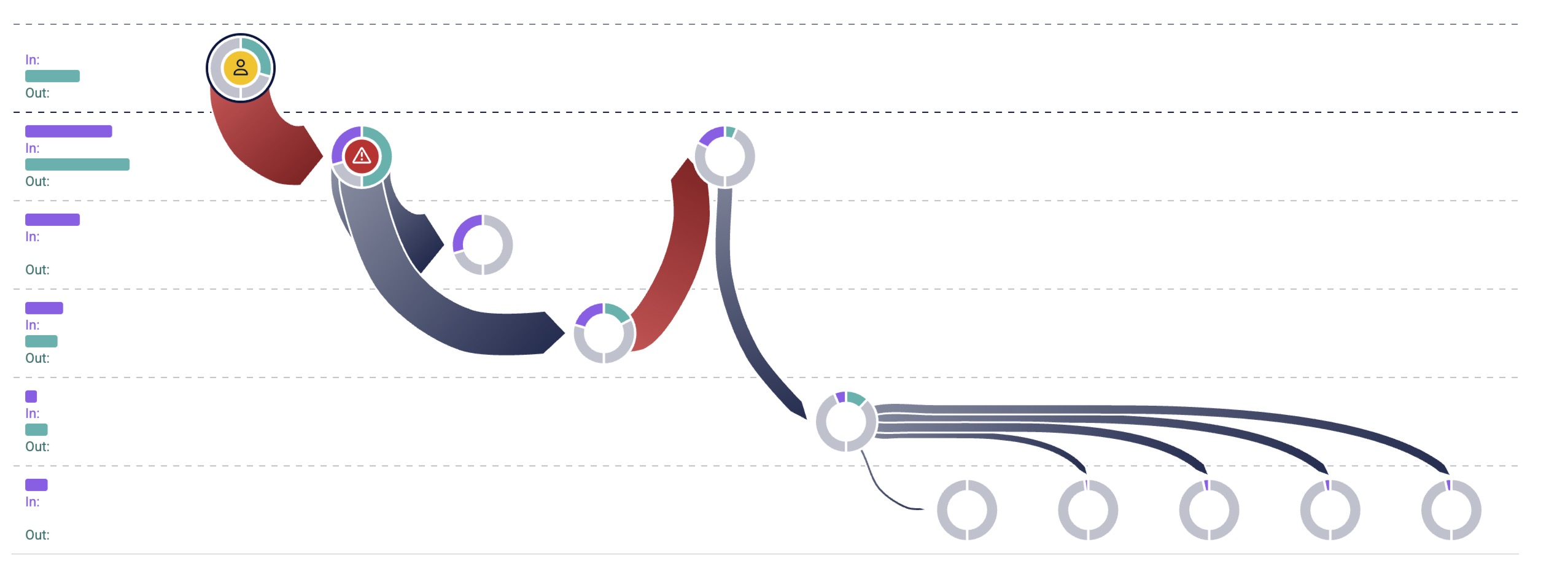
Every investigation also makes the network smarter. As investigators confirm fraudulent transactions and identify suspicious or mule accounts, those insights strengthen the intelligence available across the network. Over time, Trace reveals more connections, surfaces new patterns, and builds an ever-clearer picture of how illicit money moves.
What this looks like at scale
We’re well beyond the theoretical, Trace is already running at an almost national scale in two very different real-time payment markets. In the UK, it now sits across roughly 94% of the domestic account-to-account network and has been used in connection with an estimated 57% of reported Authorized Push Payment (APP) scam cases, per the UK Finance Annual Fraud Report 2025.
In the Philippines, coverage reaches around 99% of the national real-time network.
Why this matters beyond one product
The deeper story here is about a shift in how the industry thinks about protecting itself. For years, fraud prevention has been organized around the institution: each bank protecting its own perimeter, sharing intelligence informally and belatedly, if at all. That model made sense when fraud moved slowly. It doesn’t hold up against payment rails that move money in seconds and criminal networks that are explicitly designed to exploit the gaps between banks.
Closing the gap means treating fraud prevention the way criminals already treat the payment network: as one connected system. Making that happen takes the kind of collaboration that doesn’t come naturally to competitors: shared data standards, shared alerting, and enough trust between institutions to act on a signal that originated somewhere else.
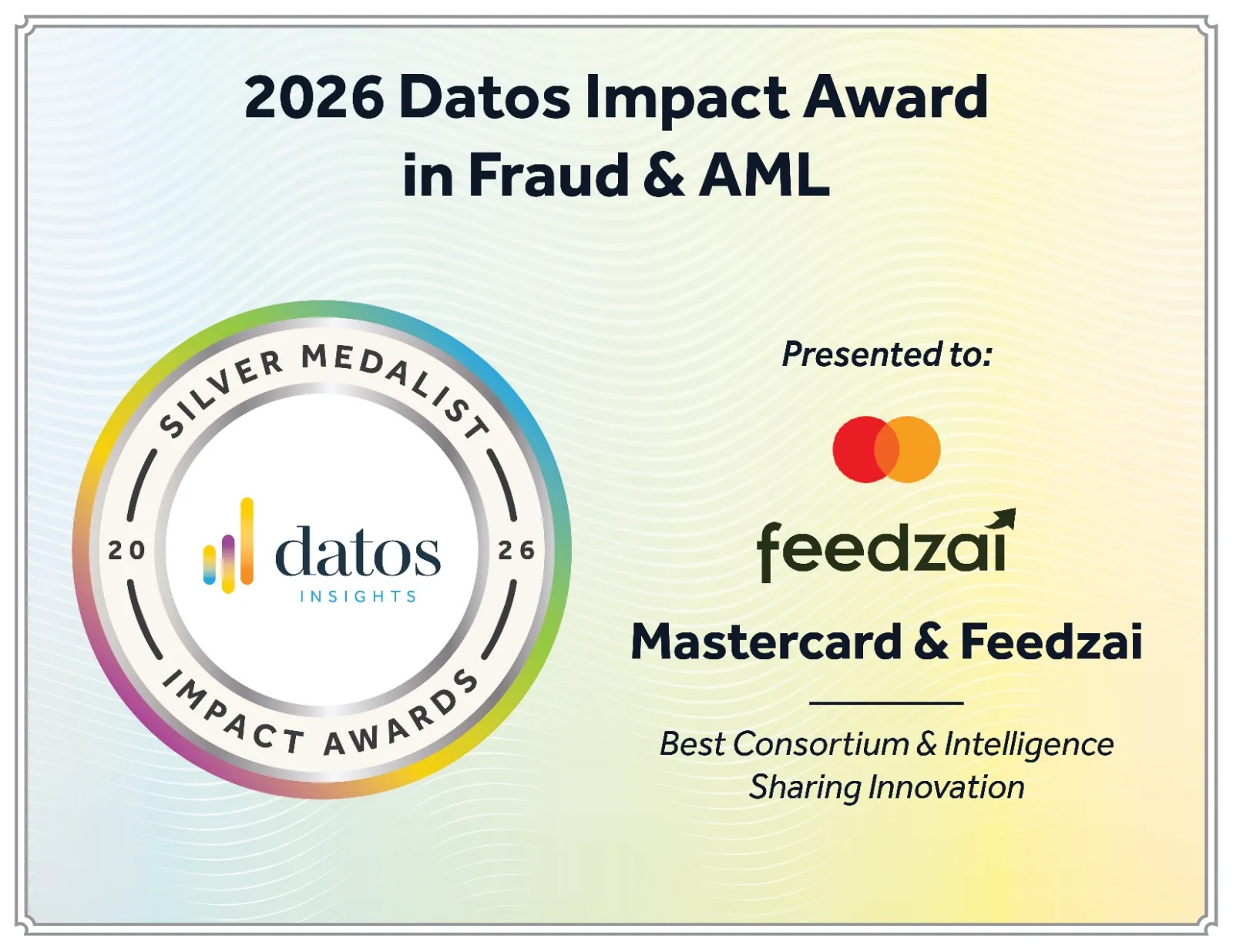
It’s this model of collective, network-level defense that Datos Insights recently recognized, awarding the work behind Trace a Silver Medal for Best Consortium and Intelligence Sharing Innovation. We’re proud of that recognition, but more than that, it’s a signal that the industry sees the required shift too.
That the future of fighting financial crime looks less like individual banks working alone, and more like a network that moves together.
All expertise and insights are from human Feedzaians, but we may leverage AI to enhance phrasing or efficiency. Welcome to the future.