July 25, 2025 · 9min read
What is Fraud Detection for Machine Learning?


Fraudsters will always devise new methods to steal money from banks or scam customers. With the advancement of faster payment services and technologies like GenAI and deepfakes, traditional methods of fraud detection are no longer sufficient. In the US, the Federal Trade Commission reports that bank consumers lost $12.5 billion to fraud in 2024, a 25% increase from the previous year. AI and machine learning solutions are crucial tools for fraud detection and prevention.1
With new fraud tactics being invented at a rapid-fire pace, the market for advanced solutions in fraud detection is poised for substantial growth. Research firm Market.us projects that the AI in Fraud Detection market will surge to $108.3 billion by 2033, a CAGR of 24.5%.2
What are the advantages of machine learning? In this article, we’ll explore the key benefits of machine learning solutions, how the technology is being applied in different industries, and key steps organizations can take when partnering with a vendor.
Key Takeaways
- Machine learning and AI algorithms are employed in fraud detection to analyze large datasets and quickly identify suspicious patterns.
- Advanced machine learning models commonly utilize two primary methodologies during their learning process: supervised and unsupervised learning.
- Feedzai’s research shows that 90% of global banks are already using AI and machine learning; other industries, including retail, healthcare, and e-commerce, are also utilizing machine learning for fraud prevention.
- When selecting a machine learning vendor, it’s important to consider key questions, including whether the platform is future-proof, supports multiple models, and is scalable.
What is Fraud Detection with Machine Learning & AI?
Fraud detection with machine learning and artificial intelligence (AI) is the usage of algorithms capable of analyzing vast volumes of data to uncover suspicious patterns. Machine learning models can rapidly review data and transactions, gaining an understanding of what a user’s “normal” behavior looks like. If an activity or pattern appears suspicious, the model can flag it for further investigation or take immediate action.
How to Choose a Machine Learning Platform for Risk
How can you be certain you’re working with the right machine learning vendor for your business? Download the ultimate guide to selecting a machine learning vendor to fight fraud and financial crime.
Machine learning models stand apart from traditional rules-based legacy systems. Rules-based systems are static and can be easily learned and avoided by criminals. As criminals change their fraud tactics, rules must be manually updated to keep up with fraud detection needs, a highly time-consuming and manual task.
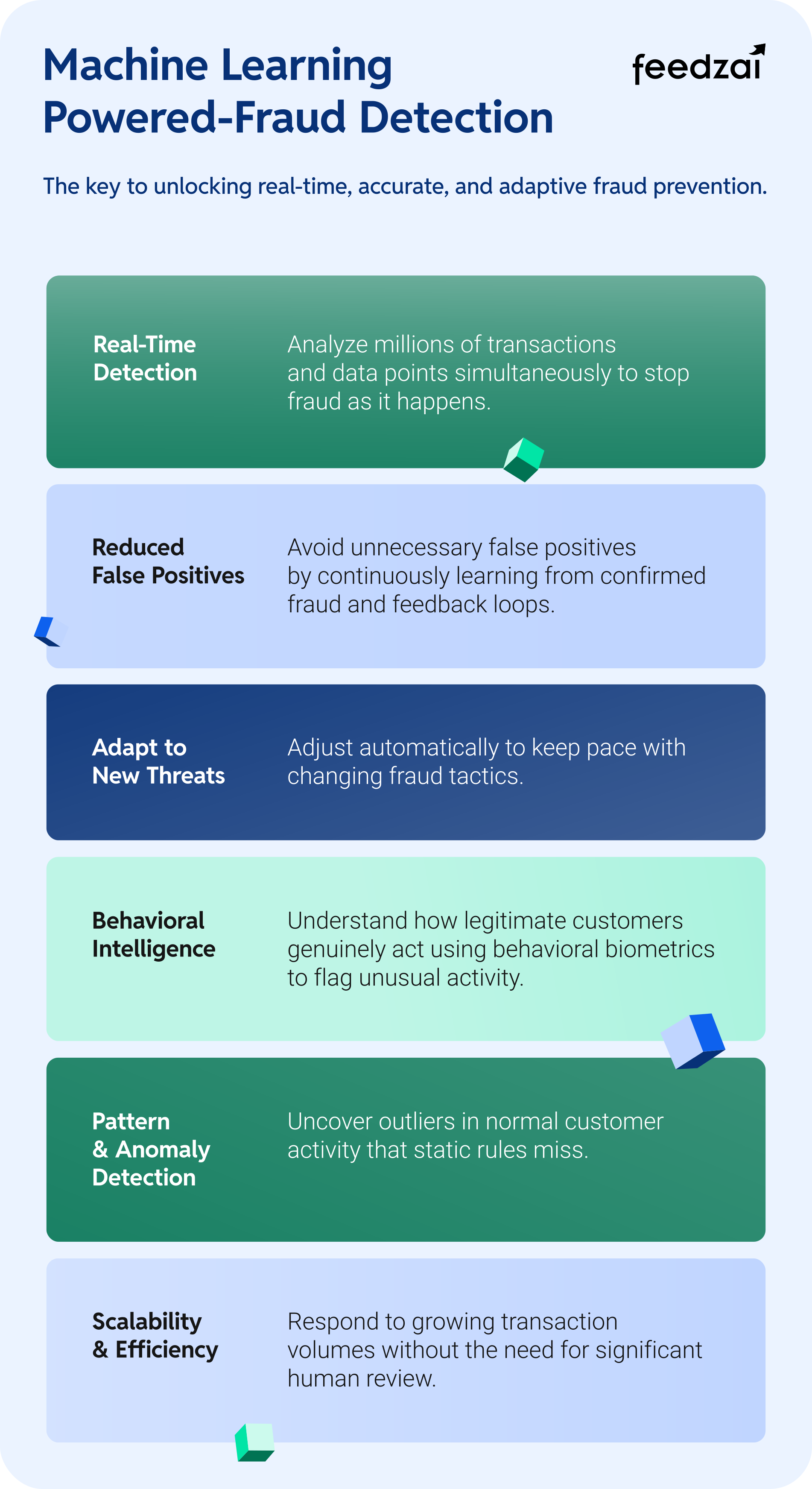
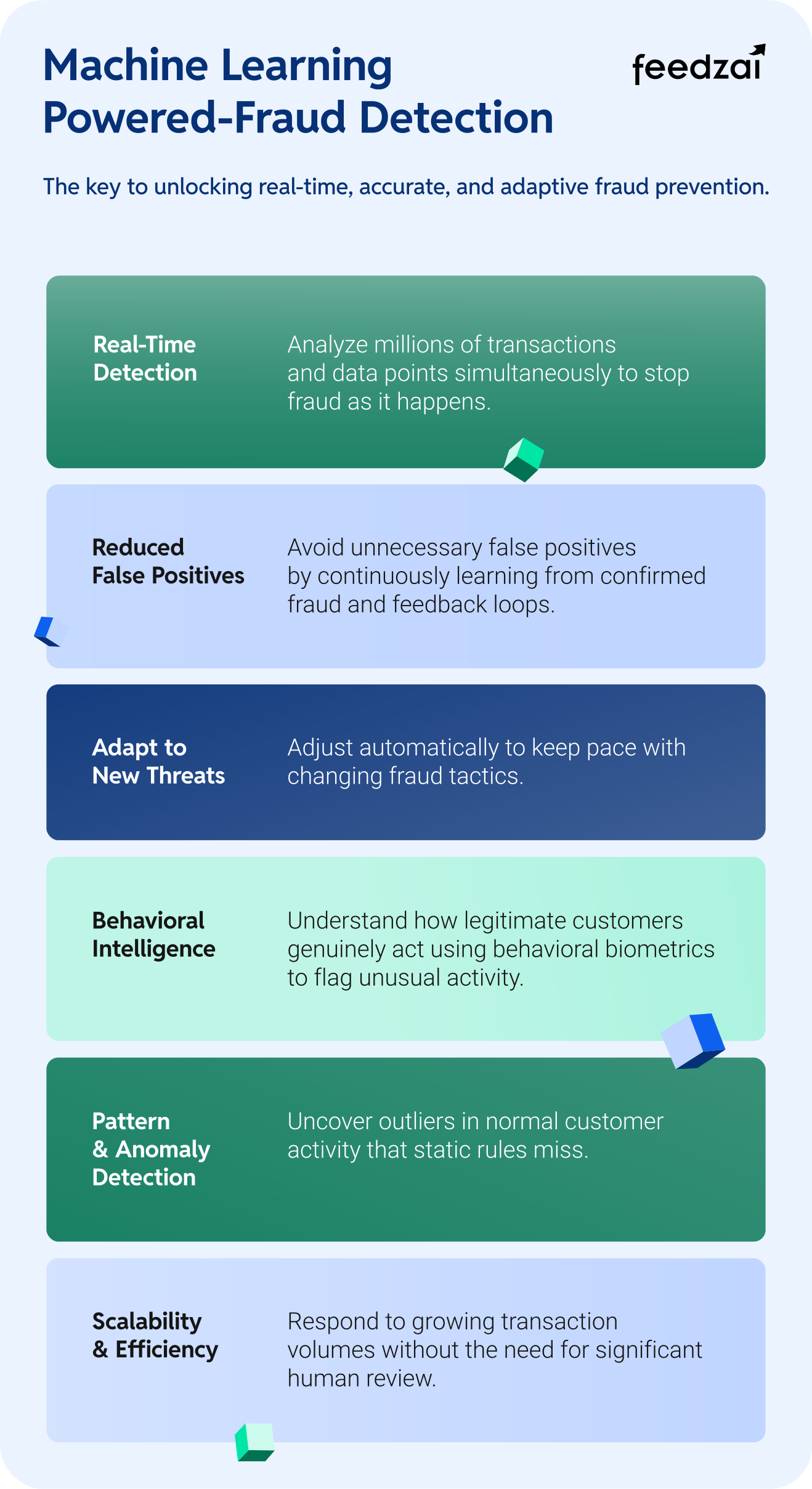
Meanwhile, machine learning can quickly adapt to new fraud patterns, detecting and preventing both known and emerging types of fraud. In the context of fraud detection, machine learning’s key benefits for financial institutions include:
- Monitoring transactions in real time: This proactive approach minimizes potential losses and enhances customer security by blocking fraudulent transactions before any money is lost.
- Flagging unusual patterns: Machine learning algorithms can analyze vast datasets of transaction histories to understand normal behavior and identify suspicious deviations. This includes unusual spending amounts, frequent transactions in high-risk locations, or multiple small transactions followed by one or more large ones.
- Continuous improvement: A machine learning model’s capabilities are enhanced by a feedback loop where human analysts review flagged transactions, providing critical insights into a model’s performance. This human-in-the-loop approach ensures that the systems learn from both confirmed fraud cases and false positives, steadily enhancing accuracy and reducing the number of legitimate transactions incorrectly flagged as suspicious.
“It’s easy to assume that traditional rules might fade into the background. The truth? They’ve never been more critical.”
How Machine Learning Prevents & Detects Fraud
The learning process for advanced machine learning models typically involves two key methodologies: supervised and unsupervised learning models.
- Supervised Learning: Supervised machine learning is like providing your model with both questions and answers to an exam. The system learns by reviewing numerous records and labeling the data as either fraudulent or a typical transaction. By examining these examples, the model learns how to spot and classify fraud based on previously observed patterns.
- Unsupervised Learning: Meanwhile, unsupervised learning allows machine learning models to explore data without prior labels or knowledge. The system reviews data for activity and decides on its own what looks ordinary and what looks unusual. This approach is beneficial for catching new types of fraud that have not yet been detected or classified. Models can flag these suspicious activities before human experts are aware of what to look for, allowing banks and businesses to stay ahead of fraud threats before they escalate.
“Unsupervised models go after the known unknowns. There’s a lot of activity that we know looks suspicious, but we don’t even know what to look for.”
Using either supervised or unsupervised learning, machine learning analyzes large datasets to identify patterns that may indicate fraud. This data may include millions of financial transactions, account logins, or application attempts. Here’s how the model typically works in practice:
- Real-Time Risk Assessment and Anomaly Detection: Unlike older systems that often process transactions in batches, machine learning algorithms continuously analyze customer and transaction data as soon as it arrives, providing immediate assessments of fraud risk. These models are designed to continually update their risk scores based on new information, enabling an adaptive and fluid approach to fraud detection that empowers banks to take swift action to prevent fraud.
- Complex Pattern Recognition and Behavioral Biometrics: Machine learning excels at spotting unusual patterns in customer data, such as inconsistent addresses, suspicious transaction histories, or rapid, uncharacteristic account changes. Furthermore, using behavioral biometrics technology, models can analyze subtle customer behaviors, including typing rhythms, mouse movements, spending habits, transaction locations, and login times, to detect signs of unauthorized access or deviations from normal behavior. This delivers “passive continuous authentication” that enhances security without introducing friction for legitimate customers.
- Continuous Learning and Adaptation: As new fraud patterns emerge and evolve, machine learning systems continuously refine and improve their detection capabilities. This ongoing learning process ensures that fraud detection remains robust and highly adaptive to the latest tricks employed by fraudsters. Advanced, self-optimizing technologies can even automatically retrain both supervised and unsupervised models.
- Proactive and Predictive Defense: One of the most impactful shifts that machine learning brings to fraud detection is enabling financial institutions to prevent fraud, stopping losses before they can occur. By thoroughly analyzing historical data and identifying emerging trends, models can help organizations strengthen their defenses against new threats.
The Benefits of Machine Learning vs Traditional Fraud Detection
Machine learning technology includes several essential advantages over traditional, rules-based systems. These include:
Benefit
Machine Learning
Traditional Methods
Detection Speed
Real-time, instant alerts
Often delayed, batch-based
Accuracy
High, adapts rapidly to new threats
Lower, frequently misses novel fraud, can be avoided by criminals
False Positives
Can understand normal patterns, allowing customers to transact without interruption
Static rules can result in false positives, leading to annoyed customers
Adaptability
Learns from new data
Relies on manual updates
Cost Efficiency
Reduces manual reviews
Labor-intensive, requiring frequent upkeep
Regulatory Compliance
Easier audit trails
Can be less transparent
How Businesses are Implementing Machine Learning for Fraud Detection
Machine learning offers substantial advantages across various sectors, including financial services, retail, eCommerce, and insurance. Its key strengths lie in its capacity to swiftly analyze vast datasets, build profiles of typical customer activities, and readily adjust to emerging trends and patterns.
- Financial Institutions: Feedzai’s 2025 AI Trends in Fraud and Financial Crime Report reveals that 90% of global banks are already utilizing AI and machine learning for fraud prevention and detection. Out of the 562 global financial services respondents surveyed, the top use cases for AI and machine learning include scam prevention (50%), transaction fraud detection (39%), AML transaction monitoring (30%), identity verification (30%), and customer journey optimization. By implementing AI and machine learning capabilities, banks are well-positioned to reduce fraud losses and deliver improved customer experiences.
- Retail Sector: Major retailers, including industry giants like Walmart, are integrating machine learning-powered real-time video analytics into their loss prevention strategies. By analyzing video feeds, these systems can detect suspicious behaviors, identify potential shoplifters, and even predict high-risk situations. This technology has proven effective in substantially reducing inventory shrinkage, in some cases by up to 25%.3
- ECommerce Businesses: Online businesses are projected to lose as much as $109 billion by 2029, according to Juniper Research.4 Machine learning models are essential for enabling eCommerce merchants to prevent fraudulent transactions and ensure that legitimate shoppers can make purchases without unnecessary friction.
- Insurance and Healthcare Industries: Machine learning is also being utilized in the healthcare and insurance industries, particularly in reducing false positives and identifying fraudulent transactions. The International Journal of Research and Analytical Reviews recently found that machine learning algorithms can identify fraudulent healthcare claims with 92% accuracy.5 This comes at a time when US healthcare fraud is estimated to reach $68 billion, according to the National Health Care Anti-Fraud Association.6
5 Steps to Choosing a Machine Learning Platform for Fraud
How can you ensure you’re working with the right machine learning vendor? When looking for a machine learning partner, it’s essential to consider several strategic steps to align technology with your objectives.
Step 1: Ensure the Platform is Future-Proof and Flexible
A future-proof platform is crucial because AI and machine learning technology evolves quickly. You need a flexible system that can adapt to new banking channels, client needs, and changing fraud patterns, such as scams, while handling increased data volumes without overfitting. Avoid platforms with built-in limits, as they can hinder your growth and expansion plans.
Step 2: Demand Control and Customization
You should have complete control to adapt to new fraud trends by easily introducing new or custom models without constant vendor approval. The platform needs to support multiple models to capture regional fraud nuances effectively and score transactions at scale for real-time risk profiling. Be wary of vendors who restrict your access to your own data, as it’s a critical asset for understanding system usage.
Step 3: Prioritize Transparency and Explainability
Avoid “black box” systems where decisions are unclear, as this creates control and regulatory problems. Instead, prioritize platforms offering “whitebox processing” that provide clear, human-understandable explanations for their risk scores, like highlighting the key factors influencing a decision. This transparency is vital for your fraud analysts to trust and effectively manage the system, as well as for meeting the increasing regulatory demands for model explainability.
Step 4: Ensure Omnichannel Data Integration and Scalability
An effective platform must integrate data across all customer touchpoints (e.g., mobile apps, websites, ATMs, and chatbots) to provide a comprehensive 360-degree view of behavior, enabling rapid model adjustments. It should seamlessly pull data from both internal and external sources. Crucially, the system must be scalable, handling increased transaction volumes and new business use cases with resilience. Therefore, be cautious of vendors with limited data source capabilities.
Step 5: Look for a Partnership and Commitment to Responsible AI
Your relationship with the vendor should be a true partnership, offering access to their ML and data science experts who understand your business goals. A good partner will also commit to Responsible AI frameworks, such as TRUST (Transparency, Robustness, Unbiased, Security, and Testing), building responsible models from the outset, and conducting regular bias audits to prevent discrimination and ensure ethical decision-making.
How Feedzai Approaches Machine Learning for Fraud Detection
As a leader in AI and machine learning solutions for fraud and financial crime, Feedzai offers a comprehensive platform designed to protect financial institutions and their customers. Our AI-first approach is essential in preventing fraud across different banking channels.
To achieve this comprehensive fraud detection, Feedzai employs several key technologies:
- Hypergranular Segment-of-One Profiles: Feedzai creates unique Segment-of-One profiles for each customer at scale. These identifiers analyze customers’ behavioral biometrics, network, device, and malware data. This detailed analysis allows Feedzai to quickly understand a customer’s normal behavior patterns, flag anomalies, and ensure customers enjoy a seamless journey.
- Omnichannel Fraud Detection: Feedzai offers a unified solution for securing all payment types and geographies, providing a single interface for fraud analytics, alert management, and reporting across various channels. This ensures a seamless omnichannel experience for customers while maintaining robust security.
- Automated Machine Learning (AutoML): Recognizing the need for rapid adaptation to evolving fraud threats, Feedzai incorporates AutoML techniques to enhance its capabilities. This automates data exploration, feature engineering, model training, and evaluation steps in the data science workflow. This capability drastically reduces the time required for model deployment from weeks to days, allowing new features to be incorporated quickly and models to be simulated and deployed with minimal IT involvement.
- Easier Decisioning and Visual Link Analysis: Feedzai provides fraud analysts and compliance investigators with clear risk explanations and full context, facilitating faster decision-making. Our Visual Link Analysis tool helps connect complex scenarios, enabling investigators to disrupt coordinated attacks, track money flows, identify new regulations, and share insights with compliance teams. This helps uncover previously unidentified risks and proactively protects customers by visualizing the network connections.
Conclusion
The digital revolution in financial services has completely changed the game for fraud, rendering legacy, rules-based detection systems largely ineffective against the speed and sophistication of modern financial crime. For financial institutions, the message is loud and clear: machine learning is no longer just a nice-to-have; it’s a fundamental requirement for effective fraud detection and prevention.
Resources
- Blog: FIs Can’t Forget Rules in the Age of AI
- eBook: Demystifying Machine Learning
- Solution Guide: Automated Machine Learning (AutoML) Solution
- Solution: AI that Goes Beyond the Ordinary
FAQs About Machine Learning for Fraud Detection
What is machine learning-based fraud detection?
Machine learning-based fraud detection uses algorithms to analyze vast datasets, learn patterns associated with fraudulent activities, and identify anomalies. It continuously adapts, improving its ability to flag suspicious transactions or behaviors more accurately and efficiently than manual methods.
How is machine learning different from traditional rules-based fraud detection?
Traditional rules-based systems rely on predefined “if-then” rules set by humans, often rigid and easily circumvented by fraudsters. ML, conversely, learns from data, uncovers complex hidden patterns, and adapts to new fraud schemes without constant manual updates, offering greater flexibility and predictive power.
What types of machine learning models are used?
Common machine learning models include:
- Supervised learning (e.g., Logistic Regression, Support Vector Machines, Random Forests, Gradient Boosting) for classification.
- Unsupervised learning (e.g., K-Means, Isolation Forest) for anomaly detection.
- Neural Networks (Deep Learning) for complex pattern recognition in large datasets.
Can machine learning detect fraud in real time?
Yes, machine learning models can detect fraud in real time. Optimized algorithms and powerful computing infrastructure allow for rapid analysis of incoming transactions. This enables immediate flagging of suspicious activities, significantly reducing financial losses and enhancing customer security during transactions.
What to look out for in an enterprise machine learning solutions and software for fraud detection?
- Real-time detection: Ability to analyze transactions instantly.
- Adaptability: Continuously learns from new fraud patterns.
- Anomaly detection: Identifies deviations from normal behavior.
- Scalability: Handles vast amounts of data effectively.
- Explainability: Provides clear reasons for flagging suspicious activity.
- Integration capabilities: Seamlessly connects with existing systems.
Can GenAI be used for fraud detection?
Yes, GenAI can enhance fraud detection. Specifically, it can:
- Create realistic-looking synthetic fraud data to train models, especially for rare cases.
- Improve anomaly detection by recognizing complex, evolving patterns.
- Reduce false positives and enhance real-time analysis.
- Simulate various fraud scenarios for robust model testing.
Footnotes
2 https://market.us/report/ai-in-fraud-detection-market/
3 https://market.us/report/machine-learning-in-fraud-detection-market/
4 https://www.juniperresearch.com/press/pressreleasesecommerce-fraud-to-exceed-107bn-in-2029/
5 https://www.ijrar.org/papers/IJRAR24B4715.pdf
6 https://hsrc.himmelfarb.gwu.edu/sphhs_policy_facpubs/229/
All expertise and insights are from human Feedzaians, but we may leverage AI to enhance phrasing or efficiency. Welcome to the future.